 As we reported last week, Easynet has been bought by Sky – as long as they get shareholder approval, but since Sky have offered a premium on Easynet’s shares, this should be a done deal.
This is the first broadcaster (in the UK) to take control of the telecom’s infrastructure required to deliver a triple-play of voice, Internet and video, though it’s likely Sky will use the broadband piece to complement its satellite delivery channel. This does give them the much need backchannel that has been elusive so far (requiring dial-up to access SkyActive and other services).
This could be a major blow for THUS who provide telecoms services for Sky as well as hosting various services (THUS developed parts of the WapTV service with Sky). Sky accounts for around £30m of THUS’s revenue (about 10% of their total) which could potentially go to Easynet which would make a huge dent in THUS’s revenue figures, though a lot of it is very low margin.However it might put THUS in a poor financial situation when viewed by the city.
 Even though Sky are buying into LLU, Easynet only cover around 250 exchanges and currently all the voice goes to BT (Easynet use the shared metallic path LLU option), while Sky are likely to want to take the phone service as well (they already have a SkyTalk package using CPS provided by THUS). Sky will need to invest to make this a reality as well as increasing Easynet’s coverage. They have said they want to go into around 1000 exchanges, so that’s a build out of around 750 – which won’t be cheap (probably another £100m’ish at least).
For Sky that may be enough as it will cover all major city centres and that’s a big plus for Sky who estimate they can’t reach 20% of their potential audience due to issues with coverage (i.e. no satellite line of site due to buildings in the way, or no way to mount a dish, multi-tennant buildings etc). LLU will give them the means to reaching these people.
It still begs the issue of what’s going to happen when BT roll-out their 21CN and attack all 5,600 local exchanges and also offer a triple-play, but at least Sky will have a lead on them and already have the content ready to roll. BT are likely to be the winners longer term, but at least Sky may have a fighting chance in urban areas.
 If all the LLU players aggregated infrastructure and competed on services, they could build a 21CN of their own now. LLU competition is going to be fiercely competitive with Wanadoo, AOL, Sky and even Be offering a triple-play – all competing for the same customers. – as well as BT (who will have nationwide coverage) and not ignoring NTL/Telewest who are also going into LLU.
The LLU operators have got maybe a 2 year window before BT get their act together, if they don’t do something co-operative now, in 2 years a lot of them will just be passing memories.
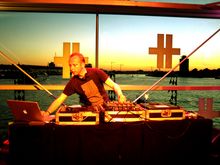 The festival has been developed by Bloc (Creative Technology Wales) and Chapter Arts Centre, Cardiff. They have managed to accommodate a large number of complex yet accessible projects. This collaboration is all the more impressive in its scale when you realise that both organisations have their own projects running concurrently (Bloc are developing Northern and Southern pilot projects in Wales with accompanying seminars; Chapter are hosting the first UK showing o the artists Olaf Breuning).
 To join in you can access a number of computer terminals at the National Museum and Gallery or at one of the festival hubs at Chapter or g39 (cor). If you are unable to visit you can play from your own
  The artist group Second Site will be displaying new video works in the windows of a empty bank on Bute Street, while Chris Evans will project his interactive game onto St John’s Church in the centre of Cardiff.
 The portable game business will be worth a thumping great $2.3 billion in four years, according to a report released today by research firm, The Yankee Group.
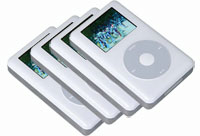 With the line between wireless handsets and portable CE devices continuing to blur, the Yankee Group used data from both their Video Capable Device Survey and the Mobile User Survey to come up with what they describe as “the most comprehensive view into the portable device market.”
 “The major players must understand who will lead and who will follow in order to successfully plan future strategy and appropriately target their investments,” he added.
 I come not to bury podcasting but to praise it. It is the creation, and victim, of its own success. It captured the imagination of the press and public with a hip pedigree and a huge wave of media hype. It will exit with a permanent mark on the media landscape.
 Podcasting is in fact not one phenomenon but three. The first is its name. Mother Apple came to claim the child it midwifed when it folded podcasting into iTunes. Apple has successfully ridden the digital music rocket by staying at the forefront of technology. It ensured the future integrity of the iPod brand, as well as the podcasting name, when it added video to the iPod.
 Sky will gain income from broadband subscription and possibly entice further subscribers to their TV service taking them to their stated aim of 10m. Far more important is a new channel to deliver content through – one they have total control over. They like that.
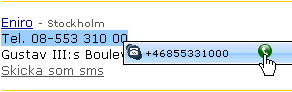 Eniro, the Swedish equivalent of Yellow pages and the phone directory have integrated the Skype URL, callto:, in to their online directories.
 “It’s important for us to add all types of contact information and that makesadding Skype to that logical”, says Cecilia Geijer-Haeggström, VP ofproducts and market at Eniro.
 We also understand that they’ll be printing the Skype ID’s in the printed directories for a small fee.
 Wi-Fly
 Is it a bird, is it a plane…
 Oooh Aaargh, ‘cos we’re pirates!
 Sky are also in an odd position as they’ll probably utilise MPEG-4 as the coding system, which means they’ll have to modify (or supplement) their existing transmission systems which are all based on MPEG-2. They’ll also have to introduce a new IP based set-top-box. However they’ll have to be carefull as to not make it too feature rich compared to existing STB’s used to decode the satellite transmissions or existing users will want to migrate to the broadband version – which will cost Sky a huge ammount as the exisitng boxes are considerably subsidised.
 It’s a fact of life – almost everywhere we turn we are surrounded by technology. From mobile phones and digital cameras to TVs and video games. But as well as making our lives easier and providing us with entertainment, more and more artists are now turning to everyday technologies when they create their work.
 “The event will be held at various sites across the capital and will illuminate the city with dynamic and individual work using a range of new and existing technologies,” said festival co-director Emma Posey.
 “We want to create a vibrant creative technology sector in Wales, with the festival celebrating this every two years.”
 Mobile phone giants Nokia have announced three new phone models aimed at the “style-conscious” market.
 Desperately described as a phone for “trend-setting men and women who enjoy being the centre of attention,” the highly distinctive 7380 looks like it’s come from the same bonkers design studio as the
 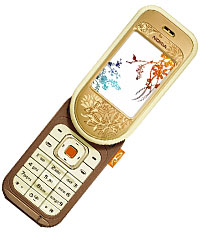 Employing a sliding keypad, the Nokia 7370 comes with a 2-inch QVGA colour screen (320 x 240 pixels), stereo speakers with 3D sound effects and a 1.3 megapixel camera (8x zoom) onboard.
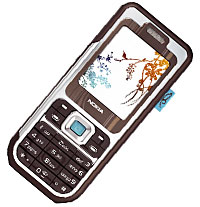 Nokia 7360