 Warner Music Group has announced a new digital music distribution mechanism based on downloads rather than physical media like CDs.
Labelling the new mechanism an “e-label”, Edgar Bronfman Jr., Warner Music’s chairman and CEO, told the Progress & Freedom Foundation conference that they were “trying to experiment with a new business model” to “see where it goes.”
With music download services raking in the cash and sales of CDs slipping, Bronfman proposed that e-label artists could churn out music in clusters of three songs every few months rather than a CD every few years.
 With far lower production costs, Bronfman claimed that the e-label will give recording artists a “supportive, lower-risk environment” (I think this means “less cash from the record company”) without as much pressure for huge commercial hits – something that could benefit artists with a more “selective audience”.
Interestingly, Bronfman added that artists signed to the e-label will retain copyright and ownership of their master recordings.
“An artist is not required to have enough material for an album, only just enough to excite our ears,” Bronfman said at the conference.
Warming up to the theme of the relationship between technology companies and the entertainment industry, Bronfman reminded attendees at the conference that recorded music has long been influenced by the distribution technologies available – pop songs were traditionally restricted to around 3 minutes because that’s as much music as a 45 rpm record could hold, he said.
Hastily compensating for his brief bout of nostalgia, Bronfman let the gathered suits know that he was a 21st century guy, unleashing two buzzword laden bon mots in quick succession: “Technology shapes music;” “Music drives technology adoption.”
 Bronfman called on the technology industry to work on digital rights management (DRM) standards, arguing that compulsory licensing – with support from P-to-P vendors – would set a price for downloaded music while forcing music companies to make their products available online to P-to-P users.
“As a content company, we quite naturally want devices out there that permit consumers to seamlessly access our music without having to worry about the compatibility of operating systems or DRMs,” he said.
“The consumers’ digital music experience should be as seamless and rewarding as possible, but we would be hypocrites to suggest that the government should force interoperability standards on devices while at the same time insisting there is no need for compulsory licensing.”
The latest figures from the International Federation of the Phonographic Industry, reveal that around 180 million songs were sold online in the first half of 2005, up from 57 million in the same period last year.
 Sony Pictures Entertainment is set to triple the number of comic books it offers as mobile downloads in Japan, making the company the number one provider of “manga” downloads.
 Sony intends to offer more comic books than competitors like NTT Solmare, (unit of telecom firm NTT) and Toppan Printing.
 Many who used the original of Google Desktop Search loved it. If you had a mention of the word you’d searched for, whether it be in a word document, an email or even in a IM session, up would come the list of mentions.
 Last week a lot of fuss was generated in the blogging world when Microsoft decided to refer to RSS as Web Feeds in their upcoming updated browser, Internet Explorer 7 Beta 1. It will be interesting to see if equal vitriol will be reserved for Google as they ‘rename’ RSS to Web Clips.
 After a brief look at it, we found that it appears to have rectified one of the problems with the old version – primarily that it slowed your machine down when it was loaded. This slow down often was so significant that it caused those with slower/older machines, or those who actually needed the power of their processors, to remove it – despite its benefits.
 Thanks to Tim for the update on the details of this story
 While not the first synth, it became popular as it grabbed musicians attention in its flexibility, enabling them to express themselves.
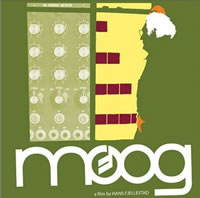 I was lucky enough to see the film Moog, by Hans Fjellestad a couple of week ago and if you haven’t seen it I’d highly recommend that you do. It was clear that Moog was a man who was not only admired by the people around him, but genuinely liked.
 Sun’s Chief Operating Officer Jonathan Schwartz has been speaking at the Progress and Freedom Foundation Aspen Summit about how incompatible strains of DRM from different companies will not be good for the consumer.
 The long-anticipated launch of HomePlug AV specification has finally reached its public release on Thursday last week.
 The body started in Q1 2000 and knocked out its first specification, HomePlug 1.0 in spring 2001. 1.0 was intended for relatively low bandwidth applications, as it ran at 14 Mbps.
 They intend the chips and products which are HomePlug Av compliant to be hitting the market in 3-6 months. We find this pretty surprising given how long the idea has been in gestation, and how many of these standards bodies have pretty open secrets as to which spec they’re going to be running with, well in advance its the public release.
 The big news late yesterday was that Google announced a second round share offer – on the first anniversary of their IPO.
 Mary Meeker from Morgan Stanley clearly feels the same, “this cash balance could allow the company increased flexibility to consider large strategic acquisitions.”
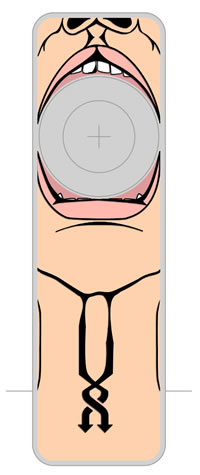 Shortly after the launch of the Apple iPod shuffle, if not simultaneously, manufacturers were quick to jump on the bandwagon by producing and offering thin cases or skins.
 Design your own shuffle cover Shuffle Art Archives is an enterprising Japanese Web site which has assembled collections of designs for decorative stickers that you can apply to your little white pride and joy.
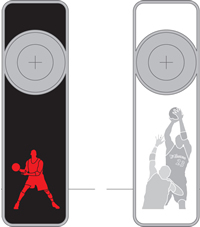 While some people take the simple approach and cover only one face of the player, others are more devoted and produce stickers for
  We’ve had hackers doing all sorts of naughty things in the past, but one thing I heard about recently is new to me:
 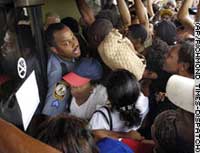 It seems people are getting less civilized by the day: In a scene reminiscent of the riot caused by the
  Russian Cosmonaut Sergei Krikalev is now the person who has spent the
  This week, it seems like we have another nice example of people in government being quite the opposite of liberal and interfering with technology: Various suit-wearing, self-important men/women of power have objected to