 The frequencies 1781.7-1785MHz paired with 1876.7-1880MHz known as the GSM Guard bands have been made available to 12 licensees under the Wireless Telegraphy Act. They are national UK licenses, though the operators of the licenses will have to cooperate amongst themselves so that interference between themselves doesn’t occur. Ofcom expect the licensees to form an industry body that will self-regulate. Operators will also be required to register all radio equipment in the “Sitefinder” database (currently populated by the GSM and 3G operators).
Even though the licenses are only low power (sub 200mW compared to 10’s of Watts for traditional GSM systems), they are suitable for services such as in-building GSM, local area GSM (such as in a theme-park) or other constrained areas. There are 15 GSM channels available, each one being able to carry 8 voice calls i.e. 120 voice calls in total. Having a reasonable number of channels will allow multiple operators to co-exist in an area and also allow single operators to cover larger areas (in such a way that multiple GSM basestations won’t interfere with each other).
Though it is expected the main use will be low power GSM, Ofcom have not specified what the licenses should be used for and as such, can be utilised for any service, such as localised wireless broadband, as long as the GSM spectral masks are adhered to (which will ensure interference doesn’t occur with the existing GSM operators).
 Winning Licensees
The 12 companies winning licenses and the prices they paid were: – (note all bids in GB pounds £)
| British Telecommunications PLC | 275,112 |
| Cable & Wireless UK ( England) | 51,002 |
| COLT Mobile Telecommunications Ltd | 1,513,218 |
| Cyberpress Ltd | 151,999 |
| FMS Solutions Ltd | 113,000 |
| Mapesbury Communications Ltd | 76,660 |
| O2 ( UK) Ltd | 209,888 |
| Opal Telecom Ltd | 155,555 |
| PLDT ( UK) Ltd | 88,889 |
| Shyam Telecom UK Ltd | 101,011 |
| Spring Mobil AB | 50,110 |
| Teleware PLC | 1,001,880 |
Ofcom published the complete matrix of bids as the award was for between 7 and 12 licenses. It was a close thing at 8 licenses as a few bidders put in high entries for low numbers of licenses and dropped the amount as the license numbers increased.
Ofcom arranged the auction in a sealed bid process in a “what you bid is what you pay” arrangement, which lead to the lowest price paid as £50,110 by Spring Mobil and the highest £1,513,218 by COLT (30x as much). Some have argued that the highest bidders paid over the odds, but they are putting a good spin on it saying that it’s in-line with their mobile strategy. The total amount of the licence fees paid was £3.8million, not bad for Ofcom’s first spectrum auction.
Of course, compared to the license fees paid for 3G spectrum (around £6bn per license) it’s peanuts.
A license, but what to do with it?
Having a license is all very well, but now licensees must be wondering what they’ve got themselves into. Just because they can run a GSM service doesn’t mean anyone will use it, in fact it may well be difficult to get people onto your network.
It’s extremely unlikely the existing mobile operators are going to want to have anything to do with these new upstarts, they’ve invested millions (err, billions) to get to where they are today. The last thing they want is new entrants poaching customers or moving users off their networks when they move into, say, an office environment. They especially don’t want their customers doing it with equipment (i.e. handsets) that they’ve heavily subsidised.
Unfortunately, what this means is that the new players are going to have to issue new SIMs (Subscriber Identity Modules) and they won’t work on existing GSM networks, or users will manually have to select the new network when they’re in range. This makes it all very difficult, and users won’t bother if it’s hard.
 New entrants could enter into roaming agreements with the current operators, but unless Ofcom mandates this (which is unlikely) there’s likely to be strong opposition. Since some of the license winners already have GSM networks, they can offer localised services knowing there’s no interference problems with existing infrastructure.
Deals with foreign GSM operators?
One way ahead is for a licensee to make an agreement with a foreign operator and the localised network just becomes an extension of their foreign network, but then when users roam on to the network they’ll be subject to roaming charges which, as both Ofcom and the EU Government know too well, can mean very high charges for the end-user. If roaming charges do decline then this may well be a way forward.
There’s also a big potential opportunity for the Channel Islands GSM networks here, as they abide by UK numbering plans, so though they are considered “foreign”, their numbers look like UK numbers, including mobile ranges. They could offer roaming agreements and even offer SIMs which would still look like UK numbers.
So the future’s bright, but it will be an interesting few years to see if any of the new entrants can really pull anything off.
 The BBC is making its first steps into the super-crisp world of high definition television (HDTV) with transmissions of Planet Earth and Bleak House in the new format at the end of this month.
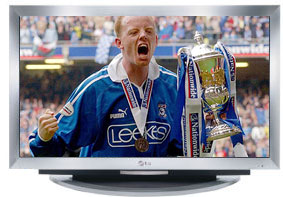 HD TV broadcasts can also beef up the whole big match experience by incorporating 5.1 surround sound and displaying the (Rooney-less) stadium action in widescreen.
 “We really feel that high definition will be the standard definition of the future,” she added.
 Sony has announced the pricing for its eagerly anticipated next generation PS3 console at a pre-E3 conference in Los Angeles.
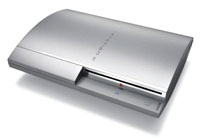 There’s certainly a lot at stake for Sony, with the company expected to lose several hundred dollars per unit – while hoping to rake in fat profits from software sales over the life of the console.
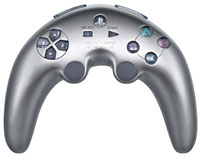 The company expects two million of the puppies to have shunted off their production line and into the shops during the ‘launch window,’ four million by the end of the year and six million worldwide by March 31, 2007.
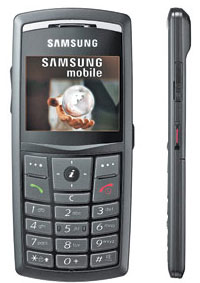 Samsung have unveiled their new SGH-X820, proudly labelling it the ‘world’s thinnest phone’.
 Apparently using Victorian corset techniques, Samsung’s designers have also managed to wedge in a 1.9″, 176×220 pixel display (262k colours), Bluetooth connectivity, USB support, a TV-out jack and a 2 megapixel camera that records video into its 113mm x 50mm (4.4″ x 2″) dimensions.
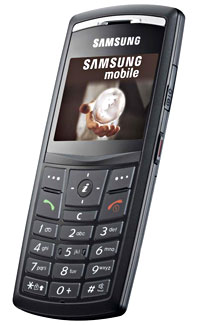 The super-slim device supports GPRS/EDGE data on 900MHz, 1800MHz, and 1900MHz GSM bands and, unlike Motorola’s futuristic designs, comes in a traditional format with individual keys.
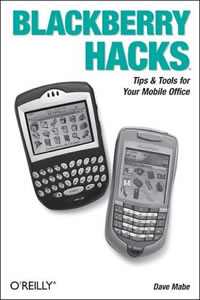 Another in the “hacks” range of O’Reilly books, where hacking is doing interesting things with something, rather than the unfortunate media convention of breaking into computers (which has some relevence as you’re getting into the guts of the BlackBerry in ways RIM, the manufacturer, may not have expected and/or indeed intended).
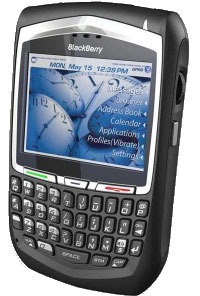 The book also gives a good insight into programming the Blackberry and describes the tools that RIM provide and how to go about using them (and what other things you need to do). RIM originally made the BlackBerry for corporates and the last thing they wanted was nasty virii and programs infecting them, so when a program tries to access some of the BlackBerry’s inner workings the BlackBerry actually checks that the program is valid and should be doing that. RIM force programmers to “sign” programs and there’s info on how to go through that process.
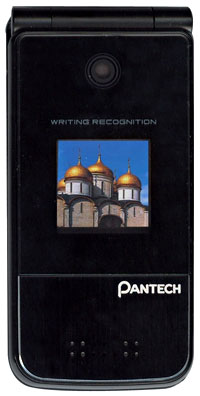 Pantech Group, South Korea’s second biggest mobile phone company, has announced that it’ll be wowing the crowds with the new PG-2800 GSM ‘finger writing recognition phone’ at the Moscow SVIAZ Expo Comm trade show this week.
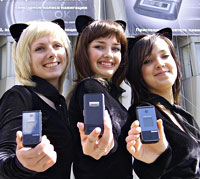 The company is also aiming high worldwide, with expectations to shift 27 million unit sales globally in 2006.
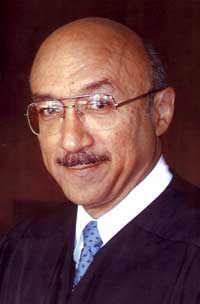 EFF-fans and electronic freedom groupies have a new poster boy who comes from an unlikely profession. They’re normally attracted to open-source code-a-holics, or white hat hacker, but this one’s a judge.
 The ride wasn’t so rough from the other two judges, with the second, David Sentelle, appearing to side with the FCC, especially for Internet phone services. The last, Janice Brown kept her thoughts to herself.
 As is now part of computer-lore, Apple Computers were called so because of the founders loves of the Beatles and their record label, Apple Corps.
 Latterly Apple Corps, with some justification, felt that Apple Computers had now entered the music business, through their iPod players and iTunes music store, so they brought legal action again.
 What drove the legal action?
 A quick catchup. We’ve been covering the
  In 1998 A Bug’s Life came along also bringing $362m in worldwide ticket sales, 1999 saw Toy Story 2 ($485m). The following years saw Monsters Inc, Finding Nemo, The Incredibles all do very well, sealing Pixar as _the_ CG animation stuido.