 It’s not cheap to launch a satellite and, as commercial satellite operators have become prey to acquisition over the last 2 years, this has been followed by the operators consolidating. The economics of satellite distribution have fundamentally changed in the USA and Western Europe. Expect competition to be fierce in what was until recently a comfortable cartel carved out the International Telecoms Union (ITU) with constituent members many years ago.
Long term, there may be question marks over the future of satellite. While it’s currently the main method of transmitting digital pay-TV platforms to much of Europe, the threats increase. The combination of the continued increases in the efficiencies of encoding technology and additional service distribution reduce the need to rely on satellite.
Satellite does still have an important role to play as an intermediate solution, that is, providing connectivity and services ahead of the arrival of more sophisticated solutions. It will also continue as a ‘in fill’ for those places where the population is dispersed and delivery of data by other means would be uneconomic.
Increasingly telecommunications traffic is being carried by fibre – an example being sports games, that used to be delivered to the broadcasters by satellite, now routinely use fibre that is available at most major venues. This has led to many Telco’s divesting their interest in the satellite companies.
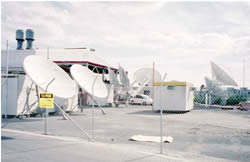
 Telecommunications companies like France Telecom are increasingly selling off underused teleport facilities – they’re those places with loads of big satellite dishes pointing towards the heavens. These are being bought by satellite operators so they can offer an integrated end-to-end solution to their customers.
So expect the merged Intelsat/PanAmSat who bought PanAmSat for $3.2 billion at end of August to take satellite uplink business from Globecast (owned by France Telecom) and other European Telco’s who have traditionally up-linked their satellite services.
The metamorphosis will continue with an IPO by Eutelsat and a beefed up Inmarsat. Despite a good year for satellite companies, focus will shift to the growing markets of Asia and Africa with tighter control of costs and careful management of capacity in the mature markets.
Anyone say all change?
 The $100 laptop project launched by MIT Media Lab, gained a big boost yesterday when the labs Nicholas Negroponte met with UN Secretary-General Kofi Annan at the World Summit on the Information Society in Tunisia.
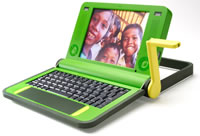 “USB ports galore” will be provided as will built-in WiFi. The only thing it will be missing is a hard drive. We’d imagine that this will be down to the additional power drain they have, and to try and maintain the necessary ruggedness. The networking will be via a wireless mesh.
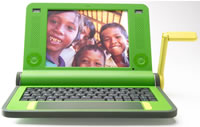 All software will be open source as in Negroponte view “open source software is the key to innovation in software and learning technology.”
 The impact of this project could be huge on many fronts – if it comes into being – and we’ve no reason to imagine that it won’t. Giving any and every child access to a computer, and teaching them to use it and inspiring them will be the start of a revolution bring free communication and equal learning to all citizens.
 Ofcom estimates that the digital switchover programme will release up to 112 MHz of spectrum in the UHF (Ultra High Frequency) band for new uses. The UHF band is prime spectrum, because it offers a technically valuable combination of capacity (bandwidth) and range.
 Ofcom point out that this is not an exhaustive list – which will please HM Treasury since the greater the potential uses and users the higher the value likely to be realised from auctioning it.
 It also provides practical guidance on how to use search effectively but safely, for example, by monitoring or filtering your search results.
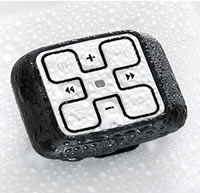 One of our Digital-Lifestyles favorite digital media entrepreneur Swede, Jens Nylander has extracted himself from recent problems and brought out a new mp3 player called MP-X.
 Yesterday, Sky’s takeover of Easynet was finalised and it looks to many that, despite paying a premium on the share price, they’ve have quite a bargain on their hands.
 Although reports that broadband is the latest media battleground have highlighted the moves by the UK telcos, the ultimate prize is the fabled home digital information gateway. The opportunities that this acquisition enables go beyond a mere triple play option (Inernet, TV & Telephone), allowing Sky to, begin by become the overriding aggregator of TV content and, in time, become the preferred digital gatekeeper for many UK homes.
 Submissions should give the name and postal address of the person sending the memorandum and should state whether it has been prepared specifically for the Committee. If the memorandum is from an organisation rather than an individual, it should briefly explain the nature and membership of the organisation. The Committee may publish some of the submissions it receives.
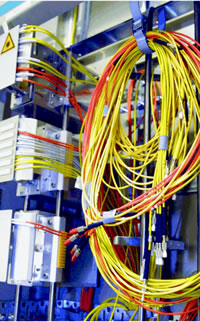 The rollout of ADSL2+ in the UK appears to be going through a reverse-hype process, with people saying it’s not going to deliver high speeds to most people. That may be partially true, but in urban areas where people are within 1.5Km of the exchange they should get 20Mb/s+.
 CRASH! Did you hear that? Any idea what it was? That was the sound of the Web traffic analysis market crashing to the floor following the no-charge release of Google Analytics.
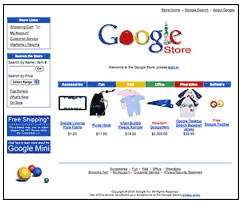 Always remember, Goggle may look like a search engine company, but it is, in fact, an advertising company.
 The history