 American teens are getting far less kip they’re supposed to, and a new study points the finger of blame at electronic gadgets in bedrooms.
Boffins say adolescents should get nine hours of sleep a night, but a survey by the Children’s Hospital of Philadelphia found that 45 percent of middle and high school students were recording less than eight hours on a school night, with more than a quarter nodding off during lessons at least once a week.
Jodi A. Mindell, associate director of the Sleep Center at the Children’s said that computers, mobile phones, televisions, video games and other gadgets were all playing a part in keeping kids away from their slumbers.
“Those with four or more electronic devices in their bedroom were twice as likely to fall asleep in school,” she said.
 The “Sleep in America” poll – which polled around 1,600 youths aged 11-17 and their caregivers – found that technological distractions were preventing kids from winding down and relaxing at the end of the day.
Back when we were kids (cue: Hovis music), we only had the option of listening to the radio or reading a book come bedtime, but American kids now have bedrooms positively buzzing with technological distractions.
The survey found that in the hour before bedtime kids would be kept wide awake watching television (76 percent), surfing the web/sending instant-messages (44 percent) or chatting on the phone (40 percent).
“Many teens have a technological playground in their bedrooms that offers a variety of ways to stay stimulated and delay sleep,” commented Mary Carskadon, director of the E.P. Bradley Hospital Sleep and Chronobiology Research Lab at Brown University.
“Ramping down from the day’s activities with a warm bath and a good book are much better ways to transition to bedtime,” she advised, adding that firmly upheld bed/wake times and TV-free bedrooms would all help kids get the kip the need.
Personally, we can’t imagine having a bedroom that wasn’t stuffed full of gadgets and gizmos but then we’re all, err, grown up. And tired.
Sleepfoundation.org
National Center on Sleep Disorders Research
 The BBC are reporting that they are suspending a Blue Peter badge scheme. Why? Cheeky blighters are buying them on eBay and presenting them as if they ‘earned’ them and claiming the benefits.
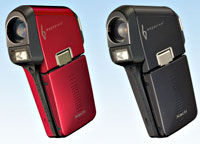 Sanyo have just launched what it’s claiming is the world’s smallest, thinnest and lightest solid state digital camcorder, the Xacti C6.
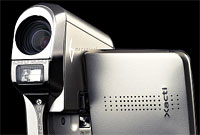 Saving space by recording straight to a SD card instead of using conventional tape, recordable DVD or hard disk, the Sanyo can grab an hour of VGA resolution (640?480 pixels) video at 30 frames-per-second on a 1 GB card using the “TV-HQ” mode (MPEG-4 bit rate: 2 Mbps).
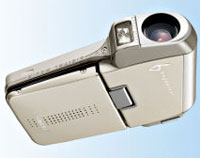 There’s also a 5x optical zoom, 12x digital zoom and a Digital Image Stabiliser for correcting any wobbles, with the CCD sensor using 9-pixel mixing technology to record brighter and clearer video in low-light situations.
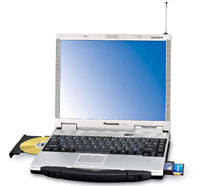 More rugged than Chuck Norris in a suit of armour, Panasonic’s latest addition to their Toughbook notebook series is set to be introduced at the CTIA Wireless IT & Entertainment 2006 event next week.
 In line with its rugged ambitions, the lappie is packaged in a full magnesium case with carrying handle and sports a water/spill resistant keyboard and a shock-mounted 80 GB hard drive.
 AUDIO
AUDIO Britain remains in the grip of a texting mania as new figures reveal around 99 million text messages were faithfully banged out on little keypads every day during February.
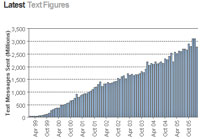 The SMS stats revealed that while love may be – quite literally – in the air, most people preferred to profess it from the comfort of their keypad, with only ten million romantics going to the trouble of sending a proper Valentine’s card through the post.
 The MDA has forecast that text messaging figures will reach an annual total of 36.5 billion text messages by the end of 2006, compared to 2005’s 32 billion total.
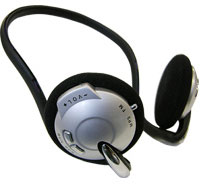 Most built-in MP3/FM/headphone combos are so bulky it looks like the user has got two halves of a tennis ball stuck on their heads, but a new headset from Japanese manufacturers Thanko looks to change all that.
 Clearly getting carried away with claims about the unit’s diminutive size, the (ahem) ‘ButterFly’ FMP3 comes in two flavours offering 512MB and 1GB flash memory capacities, with the built in MP3 player supporting MP3 and WMA at 32 – 192Kbps data rates.
 Powered by a non-removable 3.7V lithium ion battery, charged over the USB connection, the hazy web translation suggests that the makers are claiming up to 700 minutes for radio play and 350 – 400 minutes of continuous MP3 playback.
 This is the week when our children’s children will look back and ask “Didn’t they honestly know?” – the week we pass laws enabling State ID cards. And what’s the hottest story of the day? A mouse with a microphone!
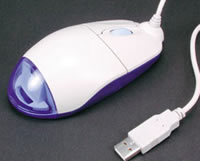
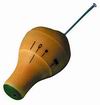 Stick one of these little bugs in your ear, and you’ll be able to hear everything that the mouse user says.
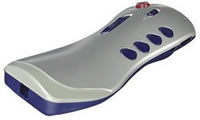 In the case of the spy mouse, you’re warned. If someone gives you a mouse looking like this, you can obviously tell it’s not a standard Microsoft or Logitech mouse, and adjust your conversation to suit.
 Frappuccino-supping designers desperate to run Adobe’s high-end Photoshop graphics suite on their shiny new Intel-powered Mac computers are going to be in for a long wait, according to Adobe engineer Scott Byer.
 Apple’s switch from PowerPC to Intel chips has forced software vendors to rewrite their code to accommodate the different architecture as the chips don’t share the same ‘language.’
 Currently, only Apple’s iMac, MacBook Pro and Mac Mini machines are powered by Intel chips, with the iBook and PowerMac machines still using IBM PowerPC chips.
 With a leather-gloved stroke of the company white cat, Google’s mastermind cackled loudly as new figures revealed that their plans for UK domination are nearly complete, with almost three out of every four searches in the UK using their search engine.
 It looks like the Brits have taken a particular shine to the San Francisco-based search giant, with February’s search referral stats outperforming Google’s US average for the the month (55.39 percent) and their global average (62.4 percent).