Anyone who was concerned that Internet search giant Google would be hampered by going public in August can breathe easy as Google announces, in its first financial results since floating on the stock market, that its profits have more than doubled.
They have posted third quarter net profits of $52m (£30m), up from $20.4m in the previous year, and its share price has now surged more than 90% since its initial float.
Not bad for a company, which was started in a garage by two students and overtook the established search engine giants Yahoo! and Microsoft to become the most popular search engine in the world. If only so many rock bands who started life in that same auspicious incubator could have done so well.
Many have argued that Google is an advertising company, not a search company. As Google strength as a search tool has surged, so has their income from advertising. Demand for their paid-for search text-ads, where advertisers are increasingly willing to pay high prices to have their site listed along side search results in the knowledge that they only have to pay if a potential customer clicks on their link. The move to putting their advert on many other sites, targeting them closely to the pages content by automatically understanding what the page was about, significantly increasing their reach.
Google hasn’t rested on their advertising laurels, have now moved into email, a core business for its rivals Yahoo! and Microsoft, and it also operates a comparison-shopping search engine called Froogle, which recently launched in the UK. It’s not stop there – it also recently announced a test of a new desktop search product in the US that allows people to search Google using mobile telephone text messages in an ongoing game of chess where they are trying to anticipate what a rival like Microsoft will do.
Personally, I get nervous when ‘the suits’ move in on previously laid-back but remarkably successful technology companies. Google and rival Yahoo each get a significant portion of their revenue from the lucrative Web search advertisements, and while some analysts predict that growth in this area will slow down in coming years, its hard to predict where Google will end up if this potential difficulty is realised.
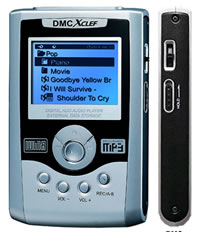 Just when you were find it tough to find enough music to fill your 40Gb iPod, Digital Mind comes along with the DMC Xclef 500 portable MP3 music players. Christened “big brother” it has the largest available storage space of any portable music player on the market. With a price tag of $449.00 (~€355), this bouncing 100Gb baby is capable of holding more than 25,000 music files, so now all you need is the time to listen to them – close to two months of 24 hours a day listen.
 Sega are launching a wide reaching, active and colourful campaign to trumpet in the arrival of Sega SuperStars, the first non-Sony game developed for the EyeToy. Available from October 22nd, the campaign will highlight the excitement and interactive nature of the game.