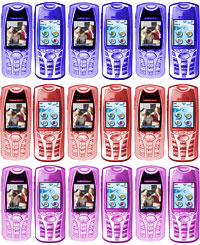
 Market analyst Gartner reports that mobile phone sales have soared 22 percent compared to the same period last year.
In the third quarter, manufacturers shifted a mighty 205.4 million mobile phones, with Gartner predicting that mobile phone sales could total 810 million units this year.
The report observed that consumers are still slow to warm to 3G, but growth is expected in the fourth quarter.
Finnish mobile giants Nokia increased their market share during the third quarter to 32.6 percent, up from 31 percent a year earlier.
Motorola’s hip’n’happening RAZR phone helped increase their market share to 18.7 percent, letting the company leapfrog their rivals Samsung Electronics into second place.
Now sat glumly in third place with 12.5 percent of the market, Samsung’s fading performance was put down to the company failing to address emerging markets as effectively as their rivals – in particular Motorola, who introduced a winning range of basic, very-low-cost phones.
In the US, new customers were thin on the ground but there were mobile phone sales aplenty (36.3 million units) with customers switching operators (“churn”) to get a better deal.
 In the Latin American segment, sales were up 46 per cent compared to last year, totalling 26.1 million phones units, while in Western Europe, big sales of 40 million phones were driven by customers upgrading their handsets.
Gartner’s report curiously lumped Eastern Europe, the Middle East and Africa sales together, arriving at a total of 39.7 million, up 40 percent compared to a year earlier.
The main movers in this area were Nigeria, Poland, Russia, South Africa, Turkey and Ukraine.
Across Asia, sales zipped up to 52.2 million units, up 27 percent compared to the last year’s quarter with China and India contributing strongly to the growth.
Meanwhile, figures were far less rosy in the Japanese market, registering a minuscule growth of 0.6 percent, to 11.3 million phones.
The Gartner report predicts full-year sales of up to 810 million phones, which may even reach 820 million if suppliers and distributors are able to fully meet consumer demand.
 For a long time, Cisco was only focused on high-end corporate sales. This started to change with its acquisition spree. Back In June 2003 it acquired Linksysin order to attack the home and small business markets.
 DSL is much cheaper to install as it uses existing phone cabling, ratherthan CATV which requires digging up the road, installing fibre tothe street and co-axial cable to the home (this may not be true forgreenfield sites, but in countries with existing infrastructure likethe UK it is).
 Though Cisco have bought Scientific Atlanta, who manufacture the consumerpiece of the puzzle, by expanding the consumer take-up of IPTV they arealso expanding the core network business. Don’t forget, running IPTV servicesrequires a lot of investment in network infrastructure i.e. moreCisco kit.
 TiVo have announced the release of new software, slated for the first quarter of 2006 that will let owners watch recorded television shows on their Sony PSPs and video iPods.
 This development is a further blow to TV network schedulers and their much-relied on conventional prime time programmes. This theory is torn apart when mobile viewers are able to watch programmes recorded the previous night, on the go.
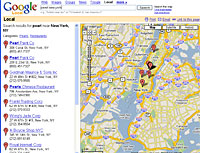
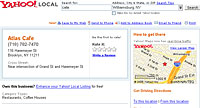 Using search engines has become the second most popular activity for Web users, according to new research from the Pew Internet & American Life Project.
 ‘Gen X’ surfers (29-40 year olds, not the Billy Idol-fronted band) were online the most (51 per cent), followed by ‘Gen Y’ users (18-28 year olds), ‘Older Baby Boomers’ (51-59 yrs old), ‘Younger Baby Boomers’ (41-50), ‘Matures’ (60-69) and, finally ‘After work’ (70+). We wonder who makes up these daft categories?
 The Internet was supposed to herald in an age of paperless offices, online browsing and tree-untroubling electronic mail, but it seems that when it comes to flogging goods, the trusty old print catalogue still rules the roost.
 The survey found that old fashioned catalogues remain one of the most effective promotional channels for generating online orders, with 60% of survey respondents currently licking stamps on catalogues and brochures to be sent to customers in an attempt to increase online sales.
 Additionally, the survey revealed that 55% of retailers planned to follow the annoying trend set by High Street stores and “extend” the Christmas buying period by encouraging consumers to buy earlier (If only we could “extend” the Christmas holiday period too).
 Around 80% of consumers are expected to buy at least a quarter of their Christmas purchases online this year – up a mighty 15% over last year.
 Nielsen, the top American agency that measures TV viewing audiences, is going to provide ratings that take account of time-shifted viewing through digital recording devices like TiVos even though viewers are able to, and in my experience, generally do, fast-forward through the paid for messages.
 The US networks say that time-shifted ratings should be taken into account, and point out that PVR users watch more TV – which we don’t dispute. They watch around 5.7 hours and that’s more than 10% extra when compared with the technologically-disadvantaged standard household. Their logic follows that this extra 10% of viewing, gives them more opportunity to see commercials. With PVR penetration in the USA already around 8% of the TV universe and expected to rise steadily over the coming years, this adds up to a is significant amount for media buyers.
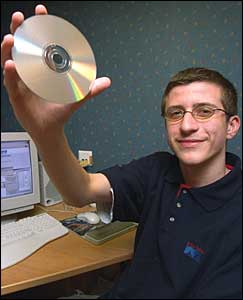 Because Criminals Make the Best Police Officers
 The other law other are saying have been broken by SonyBMG, and this is one that could land them in BIG legal difficulties, is
  Hauppauge Digital have whipped out a new add-on card to convert a boring old PC into a multimedia-tastic satellite TV receiver.
 Freesat will be the satellite equivalent of Freeview,” said Yehia Oweiss, Managing Director of Hauppauge Digital. “Already broadcasting BBC, the service will be available to all UK households and bring free digital TV to the 25 per cent who are outside Freeview’s area. Consumers can buy our Freesat tuner now and enjoy many digital channels now, with more being added all the time.”
 Of interest to the media and communications industries will be the final report of the Martin Cave led
  The
The