 BT have been enjoying government payouts to maintain their networks.
Interesting news for all those that thought it was many years since BT was an ailing monopoly to be propped up by a Labour government.
It was revealed in an answer to a parliamentary question (text below), that around £7 million has been paid to BT in England and Wales, and a contract for work in Scotland, that is not yet complete, should benefit the Telco goliath to the tune of a further £16.5 million. BT has also received undisclosed sums from the East Midlands Development Agency to extend broadband availability in the region.
Now this might come as a surprise to those who’ve got the impression that BT was doing this along with its investment in the so-called 21C network, as some sort of “Noblesse Oblige”.
Looking back over our archives for January of this year, it put a smile on our faces to see BT, when defending itself against smears of improper financial assistance related to the UK property rating system, responded to criticism leveled by those terrible bureaucrats in Brussels with…
“BT is surprised that the European Commission is to investigate the UK government over the property rates that BT has been paying. In BT’s view, any allegation of state aid would be groundless as BT has received no benefit from the UK government. BT is confident that the UK government will demonstrate the fairness of the UK ratings system.”
Expect smaller UK operators to cry foul – with some justification – as they see the dominant player’s position reinforced by government money, and BT’s competitive edge further strengthened in areas that include upgrading their network for TV delivery.
(Ed: Looking at this information, it feels wrong that BT are being given public money to maintain their network, one which they are directly gaining income from. This benefit isn’t passed back to the general public who are funding it, but instead to BT’s shareholders.
—-Fully text of the questions and answer.
Stephen Crabb (Preseli Pembrokeshire, Con)
To ask the Secretary of State for Trade and Industry what the total amount of financial subsidies and grants received by BT has been since 1997 for the purpose of extending broadband availability in the UK.
Alun Michael (Minister of State (State (Industry and the Regions)), Department of Trade and Industry)
Since 1997 BT has received the following financial sums to enable exchanges to extend broadband availability in the UK:East of England Development Agency paid BT approximately £500,000, to enable most of their remaining exchanges in BED A areas. This was awarded through the Broadband Aggregation programme.Following a competitive tender South West Regional Development Agency awarded BT approximately £3900,000 to enable some exchanges in the Cornwall area.
Following a competitive tender, BT in Wales was awarded £3.6 million of European Structural Funding to upgrade over 40 BT telephone exchanges from UXD5, making ISDB2 services available to 99 per cent. of BT lines. The investment was also used to enable Digital Subscriber Lines, ahead of the commercial roll-out programme for the UK, in BT exchanges in market towns across Wales. It is estimated that the total project value was around £6 million.
Following a full EU Procurement Process to extend broadband availability in the North East region, BT was paid £1,830,345. This sum is subject to a downward adjustment, in accordance with a reverse contribution scheme, which operates to repay money to the Agency if broadband take up in the region exceeds a prescribed level.
£364k was awarded to Vale Royal Local Authority acting on behalf of the Cheshire Digital Development Agency who, following a competitive tender through the North West Regional Aggregation Body, awarded BT a contract to enable of a series of remote rural exchanges in Cheshire.
In Cumbria, Your Communications was awarded a large infrastructure project (Project Access) contract for approximately £17 million following a negotiated, state aid approved OJEU competitive tender. Your Communications sub contracted part of the contract with a value of around £1 million to BT for the early enablement of all the exchanges in Cumbria and specifically for the enablement of 14 exchanges in the remotest areas of the sub region.
In Scotland £16.5 million was awarded to BT following competitive tender. The roll-out has not yet been completed so not all the money has been paid as yet. The European Commission was notified under State Aid rules.East Midlands Development Agency has worked with BT on a number of sub- regional strategic partnerships, to extend broadband availability. As part of the contractual arrangements confidentiality agreements were signed by the sub- regional partnerships to protect information as commercial in confidence. Accordingly, this information is not be available for disclosure.
Hansard reference
 Yesterday evening saw a celebration of The Legacy of Arthur C Clarke at the IEE in London.
 Professor Barry Evans of the University of Surrey considered the 1980’s and 90’s were probably the golden age for communication satellites and predicted their future as an infill technology. Working alongside terrestrial delivery systems, with the possibility of satellite providing TV connectivity to mobile devices outside the fibred home.
 TiVo has announced that it plans to offer the first TV-based advertising “search solution” early next year.
 With punters able to search for products by category or associated keywords, TiVo sees big benefits for advertisers (obviously) and punters looking for information on products or services.
 Supping deeply on a morning brew of Buzzword Coffee, Tracey Scheppach, VP, Video Innovations Director at Starcom, enthused “The new TiVo application will provide both a needed platform for consumers to seek out relevant, searchable commercial content and an environment for advertisers to engage highly desirable and motivated consumers…it’s the first of its kind in the industry, and a platform that is clearly needed in this challenging advertising marketplace.”
 US analyst firm JupiterResearch has surveyed the American digital music market, and discovered that the bulk of paying downloaders come from the 25-44 age group.
 Online radio was seen to be a growing influence as were new tools like playlists and music blogs, but the report found that stronger integration with online radio and more promotion was necessary to make punters aware of these potentially powerful discovery tools.
 The report blames non credit card-holding kids, claiming that 34 per cent of 15-24-year olds use file-sharing services, and this is “impacting the way they value music with many having little concept of music as a paid commodity.”
 With a passion for creating new phones that is beginning to border on pathological, Samsung’s overworked designers have just revealed yet another new hi-tech handset, the SPH-V6800.
 There’s also a 1.3MP digital camera onboard with MPEG-4 video recording and MP3/AAC audio playback.
 With the Samsung packing in wireless connectivity into its tiny 96.8 x 47 x 24.5mm dimensions, we could well be seduced by SPH-V6800 (if it ever makes it to these shores, of course).
 Google is testing a potentially lucrative sales tool that allows users to ring up advertisers located through a Google search – for free.
 Moreover, they claim that the number will be blocked from the advertiser during the call, with Google promising to delete the number from their servers after a short period of time.
 In a sure sign that TV to the mobile is the new European media battleground, 3G mobile operator 3 Italia have announced its plans to purchase the Italian national broadcaster, Canale 7. Reports have put the price of the acquisition at between €30-35m.
 The company intends to offer a DVB-H mobile TV service from the second half of 2006. Indications are that there will be a minimum of 20 channels, although no line up has yet been decided. 3 Italia already carries Playboy adult entertainment and football via existing technology, and has worked with Mediaset and News Corp’s Sky Italia pay-TV operator.
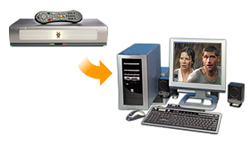 As we
As we  It could be, that time will prove TiVo have announced prematurely this new augmentation, without fully taking account of the wide ranging business and legal implications. But in this fast moving sector, innovation is a necessity rather than an option.
 A Whole New Meaning To Retro
 Ah ha! So that’s it: These “mobile phones” are actually weapons. Guess that means the end of taking my phone on the plane then! Still… The smiling Chinese man talking on his glorified, colour LCD display-equipped brick does look so innocent!
 Broadband adoption in the UK may soon be reaching its peak, according to a new report from Datamonitor.
 Although we’re nearly broadbanded out in Europe, the report sees excellent opportunities for growth in less mature markets.